
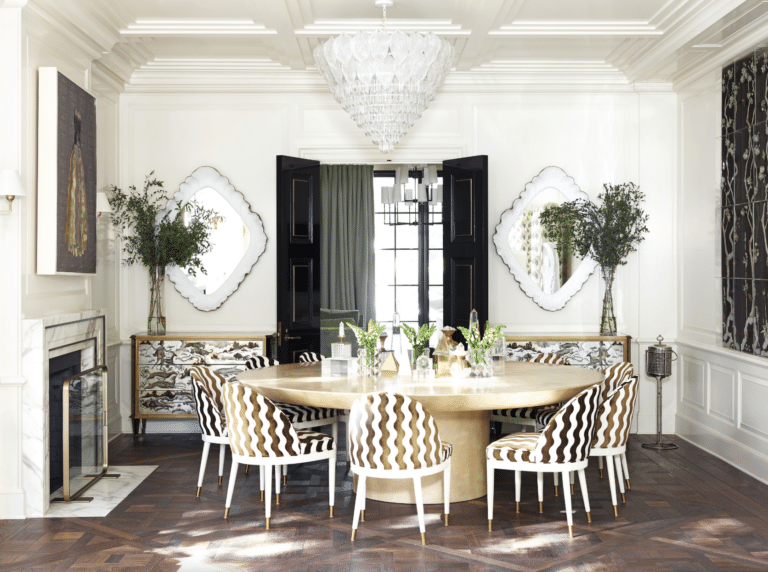
Image Credit: Veranda
What comes to mind when you hear the term “Art Deco”? Maybe you think of the glitz and glamour of the Roaring Twenties or the sleek lines and geometric shapes of the Chrysler Building in New York City. Art Deco is a design movement that emerged in the 1920s and 1930s and still influences art, architecture, and design today. This comprehensive guide will explore its history, characteristics, and enduring legacy.
History of Art Deco
Art Deco emerged as a response to the austerity and minimalism that followed World War I. It started in France and quickly spread worldwide, becoming a symbol of luxury and modernity. It was used in architecture, furniture, fashion, and more. Its popularity peaked in the 1920s and 1930s before leading to other movements like Modern design.
Characteristics of Art Deco
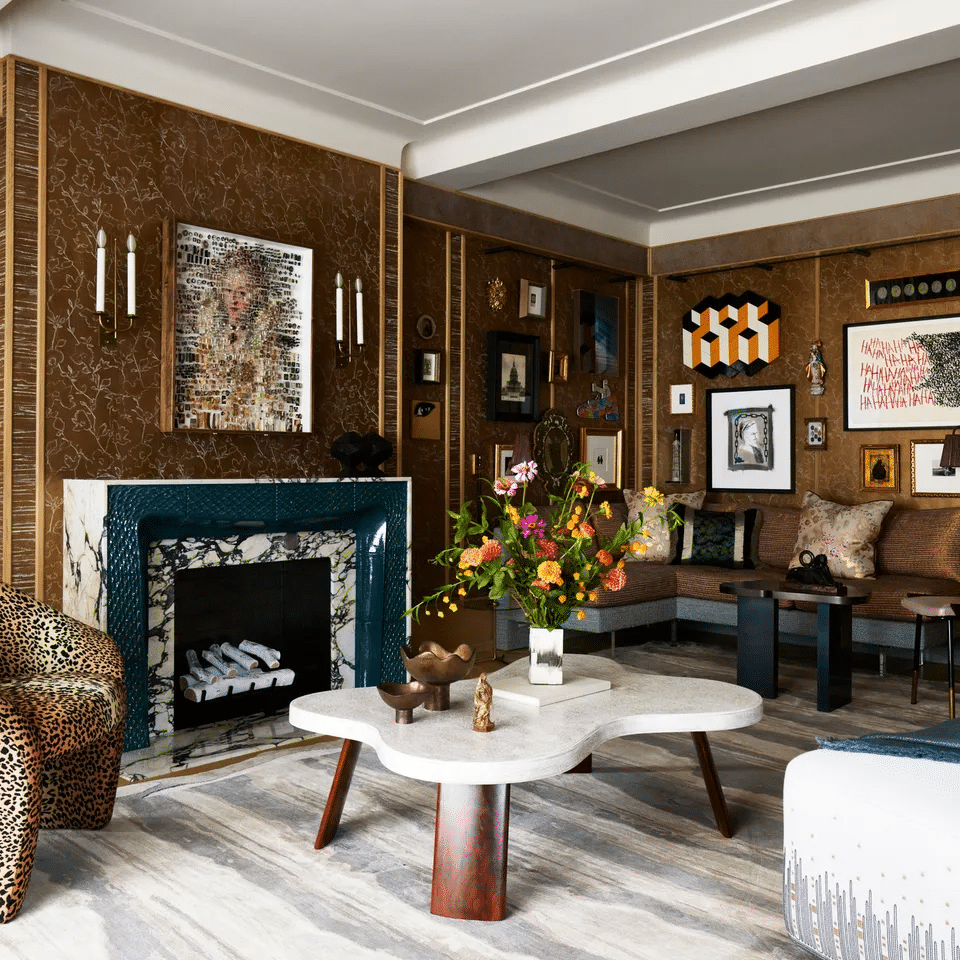
Art Deco design is characterized by its bold geometric shapes, sharp angles, and streamlined forms. It favors strong contrasts between light and dark and often incorporates bright colors and metallic finishes. Common motifs include sunbursts, zigzags, chevrons, and stylized floral and animal forms.

Art Deco in Different Art Forms
Art Deco is a design movement that profoundly influenced many different art forms.
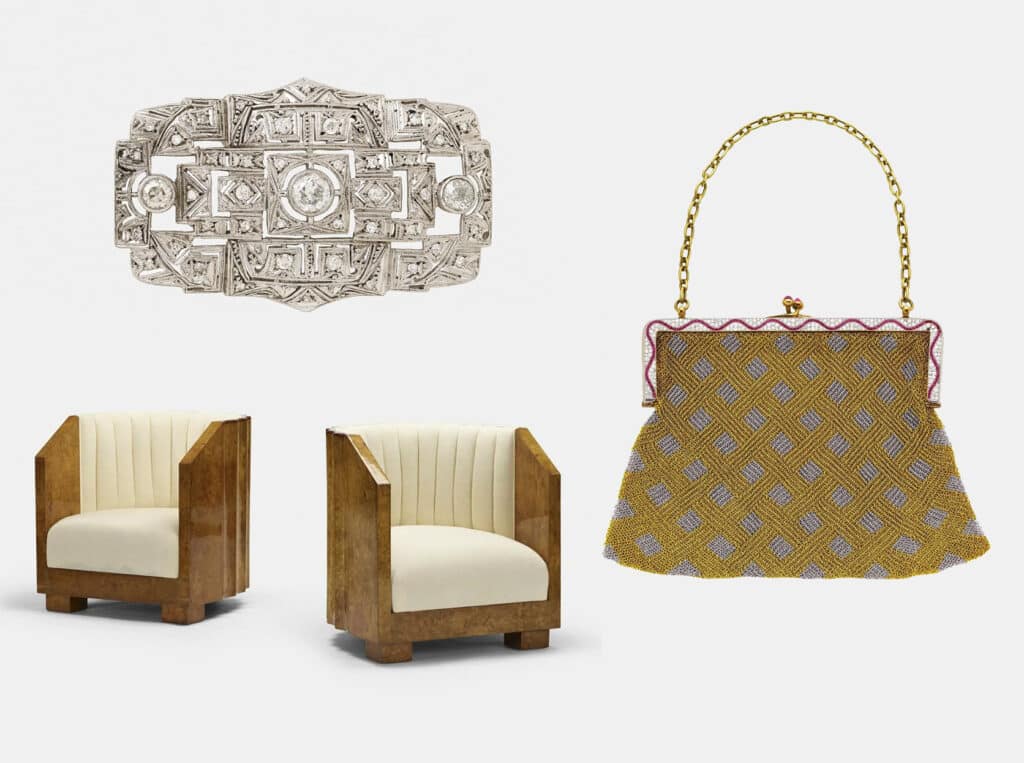
Art Deco furniture is a classic example of the movement’s design principles, featuring clean lines, bold colors, and metallic accents. Club chairs, cocktail tables, and vanity sets are some iconic Art Deco pieces.
Art Deco jewelry is renowned for its striking designs, featuring geometric shapes and stylized floral and animal forms.
Meanwhile, Art Deco fashion is all about glamour and sophistication, with designers like Coco Chanel and Elsa Schiaparelli creating sleek and stylish designs that were highly popular with the rich and famous.
Enduring Legacy of Art Deco
Art Deco’s influence can still be seen in many areas of contemporary design. Its emphasis on geometric shapes and streamlined forms is evident in everything from furniture and lighting to product design and graphic design. The style has enjoyed a resurgence in popularity in recent years, with Art Deco furniture and decor being highly sought after by collectors and enthusiasts. The bold lines and luxurious materials used in Art Deco design continue to inspire and captivate people around the world.

In conclusion, Art Deco is a design movement that continues to captivate and inspire artists, architects, and designers around the world. Its enduring legacy is a testament to the power of bold, innovative design that pushes the boundaries of tradition and convention. Whether you’re a fan of its sleek lines and geometric patterns, or its glamorous, opulent aesthetic, Art Deco is a movement that will remain a timeless classic.
